CASE STUDY · ATOS

Navigator: AI Sales Enablement

Making 800+ AI solutions easier to find, and easier to sell.

Role
Senior UX / Product Designer
Team
Product, Engineering, Data Science, Business
Timeline
[Add timeline]
Platform
Web + conversational AI
Tools
[Add tools]
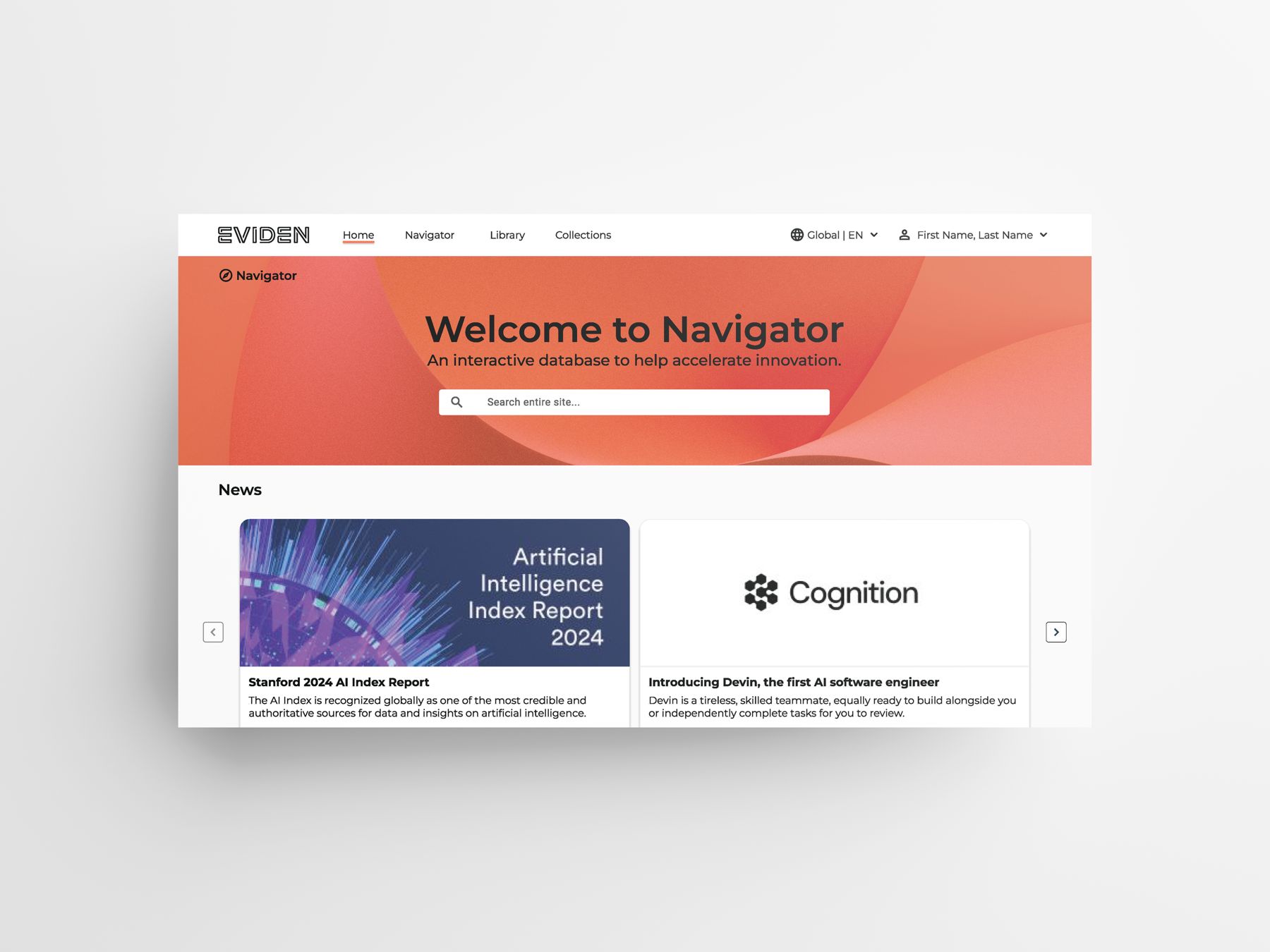
Navigator: AI Sales Enablement key screen

The challenge

As the AI portfolio grew to 800+ use cases, solutions, demos and case studies, finding the right one for a client conversation got harder. Sellers started with a business problem, not the name of an asset.

Project outcomes

  • 26% increase in global adoption
  • 80% reduction in content-discovery time
  • Supported 15+ enterprise GenAI deals as part of the sales-enablement ecosystem

Role and responsibilities

What I owned

Research & Strategy

  • User and stakeholder interviews
  • Workshops with data scientists, engineers and business teams
  • Synthesized pain points and business vs. technical terminology gaps

Design Execution

  • Information architecture, taxonomy and navigation
  • Search, filtering and result hierarchy
  • Flows, wireframes, hi-fi prototypes and usability validation

Systems & Launch

  • Conversational AI interaction patterns
  • Reusable patterns for a growing library
  • Partnered with product, engineering and data science

Discovery

From a client problem to the right proof point

Interviews and workshops showed people weren’t searching for an asset by name. They arrived with questions like these.

Is it relevant?Which AI solutions fit this client?
Is there proof?Do we have a use case, demo or case study?
For this industry?Is there something industry-specific?
Who knows this?Which experts own this area?
“Markian’s UX/UI work played a pivotal role in shaping the front end of the Navigator website, which is now one of the most popular platforms within our company.”
— Sardar Zandieh, North American Google Technology Lead, Atos

Solution overview

Structured discovery, with AI alongside

Navigator gave sales and consulting teams three complementary ways in, all backed by one scalable information architecture.

Browse by contextIndustry, business problem, AI capability and solution type.
Search & filterNarrow hundreds of assets to a useful shortlist fast.
Ask NavigatorNatural-language questions that surface relevant content.

Design decisions

How I drove it

KEY DECISION 01

Structure AI assets around how people search

What I did. Built navigation, taxonomy and IA around business context: industry, business problem, AI capability, use case and solution.

Why it mattered. Users rarely knew an asset’s name. They started from a client’s problem.

KEY DECISION 02

Fast enough for a sales workflow

What I did. Improved search, filtering, result organization and content hierarchy so users could narrow hundreds of resources progressively.

Why it mattered. Sellers often had minutes before a conversation, not hours for research.

KEY DECISION 03

Conversational AI that keeps users in control

What I did. Helped design a natural-language assistant that works alongside structured search and navigation, with contextual results users can move between.

Why it mattered. AI should complement structured discovery, not hide the system behind a chatbot.

KEY DECISION 04

Designed for a growing AI portfolio

What I did. Established scalable IA and reusable patterns so new industries, use cases, solutions and capabilities could be added without reorganizing the experience.

Why it mattered. The library kept growing. A fixed structure would have made discovery worse over time.

Reflection

Reflection

[Two or three sentences: what you learned about designing AI discovery for business users, and what you’d do next.]